Indie Dev Timeline for How Many Dudes
1 year of development to deliver our greatest success yet

The Launch of How Many Dudes
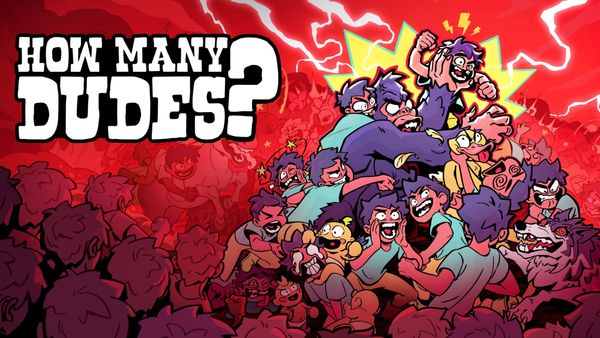
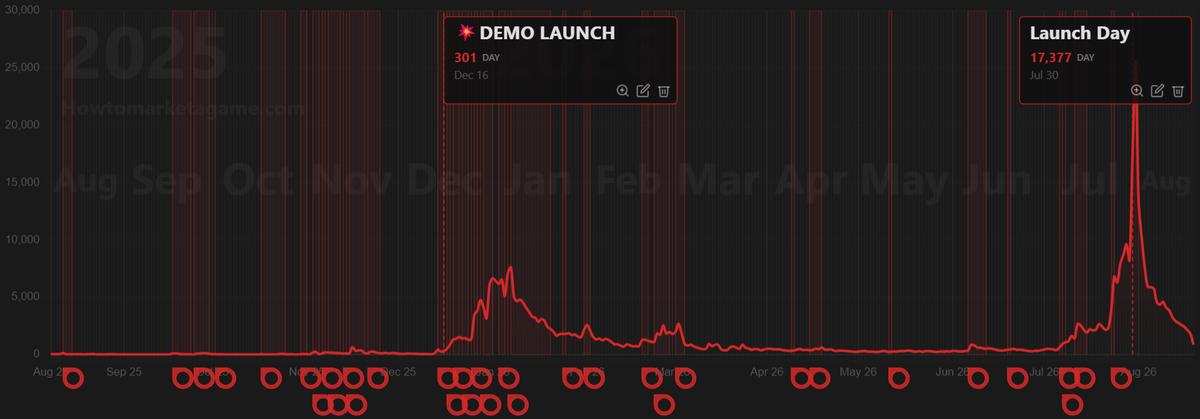
We launched How Many Dudes on July 30, 2026, exactly one year from the day we came up with the idea. Every step of the way, as we worked on this game and tried to figure out how to make it succeed, we threw out the rulebook we had been following for the past 14 years and did everything differently.
Somehow, it worked. How Many Dudes sold 173,000 units in its first week on Steam, which is far and above our best-performing game ever… despite taking the least amount of time to make.
So how did we get here, and can this be replicated? We aren’t sure on that second question, but we took COPIOUS notes along the way so we could compile our entire development cycle into a timeline. We also annotated the entire dev cycle’s Wishlist graph using the HowToMarketAGame’s Wishlist tool - you can download the HMD Wishlist CSV, and upload it there to follow along.
We wrote this for our future selves and for other indie video game devs, since there just isn't enough data out there that gets into the weeds of successful game launches. So without further ado, let's start from the beginning.
July 2025: Post-Crashlands 2 Burnout
We had just released Crashlands 2 in April 2025, and we were still in the midst of our post-launch content update cycle. Crashlands 2 was an ambitious project for us, with a massive, sprawling narrative, a hand-built world, a new building system, a much deeper quest system, a deeper equipment system, and much higher visual and animation quality compared to the original.
But despite us pulling out all the stops to hit the highest tier of quality we could, being a sequel to a successful game, and ultimately spending nearly 5 years working on it, the game didn't do nearly as well as we'd hoped. It did just well enough to keep the studio going and it attracted a decently-sized player base, but mostly just from the fans of the original. It didn’t really “break containment” outside of that community, but that certainly wasn’t due to lack of marketing effort!
We worked hard to market Crashlands 2. We sent out thousands of keys to influencers, we reached out to all the press, we spent money on ads... We did it all. But something about the game made it hard to convince people to pick it up.
So we were in a pretty weird headspace around this time. We knew we needed to launch another game soon, but how? If we had just put everything we had into making the biggest, best game we could make, seemingly with every advantage, and all of that wasn’t enough, then how could we hope to succeed?
A Different Approach
We started looking around at all the indie games that had really popped off while we were in our 5-year slog with Crashlands 2, and some really interesting patterns started emerging. There were all kinds of hit games like Brotato, Balatro, Peak, and Vampire Survivors.
These games didn’t focus on any of the things we had been focusing on in Crashlands 2. They weren’t about immersion, or world building, or telling a massive, epic story. They were all about pick-up-and-play mechanics with a ton of variety and replayability. And importantly, none of them needed to explain themselves.
In Brotato, why am I a potato? Why do I have 6 guns? Why am I a “Bro”? As it turns out, none of this matters and nobody cares. The game has the confidence to just do something, and that something works.
So we dug through all these games, and we thought... All right. We’re a tiny team, and we need to act like it. We shouldn’t be focusing on the things AAA or “triple I” studios focus on (graphical fidelity, massive worlds, branching stories, etc), because those things require way too much humanpower, which means too much investment. And with that kind of cost, if it doesn’t land, well, the whole studio might just cease to exist.
So with that in mind, we made some plans on how to constrain our next game.
First, we decided that the next game would have a development cycle of 6 months. That meant the game had to be tightly-scoped and easy to iterate on, and it couldn’t get bogged down with complex narrative and whatnot.
And second, the game needed to “sell itself.” After grinding it out for years trying to get people to pay attention to Crashlands 2 only to have those efforts not fully pay off (a problem that was even worse with our prior game), we learned that no amount of marketing effort will suddenly make a game more appealing.
We looked at interviews from Jonas Tyroller’s Youtube channel and got inspired by Gavin Eisenbeisz’ design approach, as well as the use of short-form videos of Johan Grönvall and the idea-proving methods of Rene Habermann. We took tons of notes, compiled a new design paradigm, and sought out a public game jam to take a crack at it.
Fortunately, the perfect event was coming up: the Game Maker's Toolkit Jam on July 30th, 2025.
July 30 - August 3, 2025: The GMTK Jam
Usually in a game jam we decide on an idea within 1 hour and then just get to work. It’s almost completely random, and only barely thought out, as we trust our design instincts to figure out how to make any concept into an enjoyable game.
However, the reality is that we’ve been doing this for 14 years and have done dozens of jams. Our challenge is no longer figuring out how to make a game, nor how to make that game fun. Our challenge is in choosing the right thing; a thing that lots of people will actually care about. And clearly we’d not developed THAT muscle all that well.
So, with our new design paradigm in mind, we sat down and got to work.
The Ideation Process
The theme for the jam was “LOOP”, which was vague enough that we could do anything with it. After all, one of the core principles of game design is the loop - completing an action to earn a reward that enables or empowers that same action again. It was a carte blanche theme.
We gathered our new design Pillars and settled in - intending to not actually start making anything until we felt some kind of magic emerge from the core idea. This was our time to practice. Our explicit goal was to make it so that all 30k people come away from the jam saying "did you see that Butterscotch game?" Importantly, it wasn’t about “winning” the jam; we just wanted to make something people noticed, remembered, and wanted to talk about.
The Design Pillars
(We also have a more free-form discussion of the following pillars on Ep. 582 of our podcast if you want to get deeper into them!)
- Immediacy - How clear and compelling is the story being told from the first second to the last second of this experience? No warm-ups or exposition dumps. It should deliver on the premise and open more curiosity about what’s to come immediately.
- Instinctual - Relates to some fundamental emotional aspect of being a human being. We’re naturally curious, social, performers, hunters, gardeners, tamers, crafters, etc.. We need to eat, sleep, breathe, exercise, bond, and survive.
- Nostalgia/Familiarity - There's something about this that's familiar. Games we like but haven’t seen in awhile, an art style that references a beloved thing, etc.
- Mass Concept (especially if not yet exploited successfully in a video game) - This taps into a mass media concept (e.g. Pirates, Godzilla, Storage Wars, Moonlandings, etc.), a meme (e.g. how many guys does it take to fight a gorilla?), a repeating historical event (pandemics, stock market crashes, elections, etc), a common human experience (going through TSA, trying to hammer a nail straight, paying bills, etc.), an aspect of childhood (scary monsters under the bed, finding cool sticks in the woods, looking under rocks for bugs), a toy we played with as kids (connect 4, Operation, freeze tag, etc.), megapopular shows (Game of Thrones, Breaking Bad, etc). Something that is understandable and frequently experienced, wanted, remembered, or fantasized about.
- Breaking Bad becomes Schedule I
- Starship Troopers becomes Helldivers
- Dungeons & Dragons becomes Darkest Dungeon
- The experience of air travel becomes Dear Passengers
- Easily Sharable - If this goal is achieved, the game can generate a lot of content for content creators, and/or a lot of engagement for twitch streamers and their audiences when streamed.
- Does it allow streamers to interact with chat about the game when chat (or the streamer) knows nothing about the game? Can a viewer jump in on hour 5 and immediately understand enough of what's happening to enjoy it?
- Does being bad at the game make it still fun to watch? Or even MORE fun to watch?
- Does a player want to talk about it, and is it fun to talk about? If you hear someone talk about it and haven’t played it, is it understandable and fun to hear about?
- Are players able to show off? Even better, are they able to show off a human skill that exists outside the game, too (e.g. painting via Mecha Chameleion, social manipulation via Among Us)?
- Are players self-expressing in the game? Does it allow the player to somehow put a part of themselves into the world (e.g. their actual voice, their design of an object, their creative imprint)?
- Casual Start, Deep End - The game supports casual play and doesn't seem intimidating, but provides depth for those who get into it.
Using these pillars, it took us a little over 3 hours to go through this process of choosing a game. That's not a long time to choose a commercial game, but it's the longest we’ve ever bothered thinking about what to make during a jam.
What this looked like in practice was that we generated multiple lists and then just started smashing parts of it together. We also looked for places where inverting the usual trope (e.g. Superheroes becomes The Boys) or subverting the viewer’s angle would be interesting. An excerpt of those below:
For whatever reason, we kept naturally circling back into Monster Rancher as a touchstone. That naturally led us into a lot of possible paths with making monsters or dinosaurs, or even running your own dinosaur park. But as we kept the storm brewing we just kept feeling like “eh, who cares about that?”
We were getting a little tired and felt like the wheels were just spinning. After a pause, Seth (game programmer) leaned back and said “for some reason I’m just remembering that meme about how many guys it takes to beat up a gorilla - I think I saw it again on reddit a few weeks ago” and we both had a good laugh about just how heated and absurd that debate could get.
We talked about what it would look like to have a bunch of dudes fight a gorilla, how to mechanically make that interesting with a “team budget” or something… and then we started giggling about "Ranching Dudes" at a "Dude Ranch" so they could go fight gorillas.
We just couldn’t stop laughing about it - and suddenly realized that maybe we’d stumbled onto something.
We revisited our list of top concepts and narrowed it down, rethinking their feasibility and how they met or fell short of the pillars:
- CEO Demon Cultivator - You’re a demon CEO running a health insurance company (also staffed by demons). Simulation-style.
- Sims take a lot of systems to get off the ground. Hard to finish in a jam.
- Patient Zero - A slice-of-life experience but you’re a zombie doing zombie things.
- Mechanics too vague, direction of systems not clear enough right now. Might work better with an inversion to cuteness?
- How Many Dudes - Recruit dudes, eventually fight a gorilla.
After a brief discussion we unanimously went with How Many Dudes, then dug up some references for the vantage point from TABS, Darkest Dungeon, and He is Coming (a small roguelike we’d recently played for fun).
What’s notable is that we didn’t start with genre or market research. Those approaches, while useful exercises themselves, narrow the possibility of a game’s concept from the start. With this method, genre is just a tool to focus a concept into a workable shape and try to fit it to an existing audience. Once a few fitting genres are found, you can ask the relevant business questions about feasibility and ROI to help focus the game’s mechanics and viewpoint further.
Having finally figured out what the heck we were doing, we got to work. Over 5 days we made a rough prototype of the game, constantly circling back to the Pillars as it went from being sorta turn-based to a true autobattler. When we were finished it had 6 types of dudes with different base stats, a shop for purchasing simple improvements (more Dudes, better stats), and a choice of two fights with differential cash payouts based on difficulty. While the Gorilla remained the hardest enemy, we also added wolves, rats, and toddlers as opponents for your Dudes to pummel.
Before we submitted it to the jam for judgement, we took another look at the Pillars and sought to bring more immediacy to the experience, so that the game was memorable from the moment someone started playing it. We did that by fixing the first fight to be just one dude against 10 toddlers, then uploaded a Windows exe to itch.io.
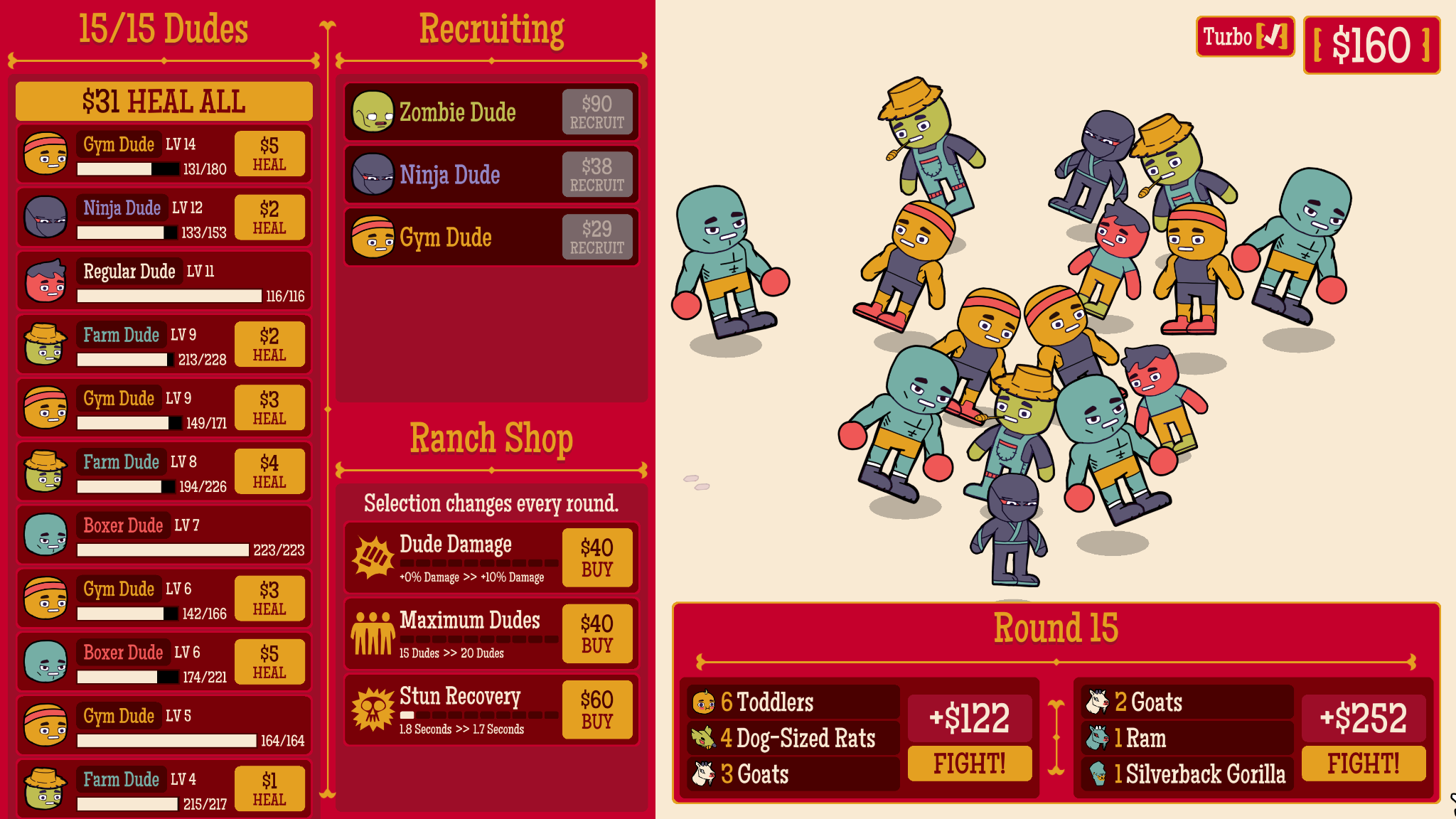
We managed to place in the top 30 of the jam - and were the only download-requiring game to do so (everything else at the top was playable in browsers). We also got to watch other jammers stream the game and see how it worked live, and work it did! Streamers would get caught off guard by the first matchup against 10 toddlers, and then suddenly they were cackling and hooked on just how goofy and fun the game was, and they’d end up playing it for a half hour at least.
We noticed that even in its basic prototype form, the game was extremely conducive to streaming. Because the battle happened on its own, the streamer basically became a commentator. And in between battles, the streamer had choices to make without any time pressure, so they would rope in their chat to weigh options. It turned out to have the perfect format for giving streamers lots of fun ways to engage.
With this early validation in hand, and a sense that this dumb idea had more legs than maybe anything we’d made before, we decided it’d be our next project.
August 8, 2025: HMD Steam Page Launches
We initially figured we could have the game launched by late April 2026 (about 6 months of full-time development, starting in October), and that we’d be aiming for 50,000 wishlists by launch for the game to be able to pay for itself. We also set a benchmark that we would need to have 20,000 wishlists by the end of the year; if we weren’t able to generate that many wishlists we'd treat that as an indicator that the game wasn’t going to be popular and consider moving on to something else.
With that tight of a timeline, we simply couldn’t wait around until the game was “great” or even “good” before starting our marketing efforts. At this point the game existed as an extremely bare-bones prototype with only 5 days of work put into it but we thought, “Screw it. LET’S GET THAT STORE PAGE UP!”
We grabbed some screenshots, put together an extremely brief trailer (which got 1000 views on youtube and promptly died), wrote up the store page description (where we just outlined some vague ideas of what the game would have), slapped together some crude capsule art from in-game assets, and launched the Steam store page on August 8th.
Every now and then we see articles about indie developers launching their Steam page, putting up a trailer, and getting 10k-20k wishlists in the first few days just based on how awesome the game looked or how compelling the concept was.
This was not one of those situations.
We were not an extremely well-known studio and didn't have people banging down the doors in anticipation of our next game. We viewed the Steam page as a “net” that would slowly catch wishlists in the background as we started talking about HMD in our podcast and community over the coming months.
We also updated the web versions of the game on itch.io and gx.games to include links to the Steam page, so anyone playing the jam version of the game on those sites could go wishlist the game on Steam if they chose.
By the end of August, HMD had 515 wishlists… technically “bronze tier” by the benchmarking standards of howtomarketagame.
On its own it this number was disheartening. But the reality in 2026 is that Steam grants you zero visibility when you put up a store page, which means any traction you get must be generated from external sources: a trailer, a youtube short, a streamer, a build on itch.io. What we saw was that any time the game got its visibility boosted on itch.io or gx.games there was a boost in wishlists, meaning that there were at least some people out there who wanted it if only we could show it to them.
We held onto the player excitement we’d seen in the jam and attributed the lack wishlists to our minimal marketing efforts (a 25s teaser video of a rough prototype for a 2d game on our YouTube channel with under 15k subscribers), and the fact that the game only had about 5 days of development under it.
End of August Wishlists: 515
September 2025: Crashlands 2 Wrap-up and Tentative HMD Development
After getting the How Many Dudes store page up, we switch back to Crashlands 2 for August and most of September to wrap up its final update. Once that was done, it was back to How Many Dudes.
Our first order of business was to address the elephant in the room: How in the HECK are we going to market this game with this short of a development cycle?
Crashlands 2 had a store page up for 2 years and launched with 183,000 wishlists. If our new store page was only going to be up for 6 months, how could we jumpstart it?
We decided to promote the game continuously during development via Youtube Shorts, which we had never really done in a serious way.
We made our first HMD Youtube Short just to see what would happen and launched it on September 17th. It got about 40,000 views in its first week, and we were able to see 293 wishlists pop out the other side by looking at our Steam backend data - about 20x the game’s wishlists from the prior week. This told us two things:
- Even as a prototype, the game had a compelling enough concept that people were willing to wishlist it if they saw it.
- If we could figure out how to make Youtube Shorts that get a lot of views, we could probably drive a lot of wishlists.
From there, we started working on more content for the game, but with a twist. Instead of our normal development priority, we prioritized working on features and adding content that would open up new concepts to make Youtube Shorts about. For example, we next added Horse-Sized Ducks and Duck-Sized Horses, due to the online debate about that, and then we made a new Youtube Short about it. This short performed better than the previous one, generating 113,000 views in its first week and 446 wishlists.
This was a promising form of market validation, so we decided to push further. At the end of September, we started getting all of our processes set up so we could start full-time development on HMD, including getting it hooked up to our automated deployment system, localization pipeline, changelogs, and QA testing pipeline. (We’ve been making games for 14 years so we have pipelines all over the place despite our small team size.)
End of September wishlists: 1,284 (Gained 769, driven by the two Youtube shorts)
October 2025: Full HMD Development Begins
Before we could start cranking out more Youtube shorts, we needed to actually set this game up to be a commercial title rather than just a prototype. We first reworked the Jam version to have more expandable mechanics:
- Dudes could no longer die, and instead they would get knocked out and be revivable with Dude Juice.
- You no longer purchased Dudes. Instead, you just gained a Dude automatically each round.
- You would post “Flyers” throughout a run, which would then allow you to recruit the associated Dude Type for the rest of the run.
- You no longer needed to spend money to heal up your Dudes; they would just full-heal in between rounds.
- We replaced the “Upgrades” system from the Jam version with the new “Relics” system, which allowed for interesting effects that had way more interactions.
- We added a bunch of new Dude types, and each Dude Type gained an ability that gave him a unique niche in combat.
After that development sprint, we made two more Youtube shorts that incorporated some of these new mechanics. They didn’t land as well as the first ones did, generating only 17,000 views and 113 wishlists in the first week between the two of them. We took a final crack at it and launched a third Youtube Short which performed better (26k views in its first week), but still not great. All three of these shorts still converted their views into wishlists at a decent rate, but the views just weren’t coming in.
Had we been wrong about choosing this dumb idea for our next game?
We honestly had doubts. But we didn’t take these data points in isolation, because we’d also made some shorts for Crashlands 2 and Levelhead during this time. And though many of those Shorts achieved higher views than the HMD ones, when we looked in the Steam backend, we did not see an accompanying boost in wishlists. Those games didn’t seem to be converting Shorts views into wishlists, but HMD obviously did.
So we decided that it was probably because we were still learning how to make Youtube Shorts that YouTube would actually show to people.
Time would tell!
Since by the end of October we now had some real mechanics and the start of some actual content, we decided to ditch our old trailer and make a new one, to hopefully make the Steam page more enticing and to drive a little more hype. To make this trailer, we looked back through our Youtube shorts and used their engagement metrics (not views, since we figured view numbers aren't as meaningful) to figure out which concept had the best “hook.” We then used that concept as the basis for the trailer and ended up with this.
Yet again, the trailer did absolutely nothing on youtube (622 views in 4 days), despite having solid engagement metrics compared to our other game trailers. Our youtube channel was, however, a mixed bag - it also hosted our dev-focused podcast at the time, which we later learned was likely causing the channel’s video content to go absolutely nowhere, due to the mixed audiences. We tried some ads via YouTube Promote (about $500) and, while they generated views, they produced absolutely no boost in wishlists so we decided not bother with YouTube ads again for this project.
Sam (the game artist) also worked up some new “key art” (main promotional artwork) for the game, and we used that in combination with the new trailer to fully revamp our Steam page.
Again, Steam did not send meaningful traffic to the store page. Steam sent a total of about 160 visits to the HMD store page in the entire month of October, out of 2400 visits. The rest were driven by our efforts external to the platform.
End of October wishlists: 1,633 (Gained 349, driven by our meager Youtube shorts)
November 2025: Initial Outreach Efforts
We continued developing the game’s content and features throughout November, and word slowly started to spread about the game, giving us little positive glimpses into its potential. And this was a good thing, because honestly at the end of October we were really wondering if maybe we’d made the wrong call: the meager wishlists we'd accumulated so far were nowhere near what we'd need for launch.
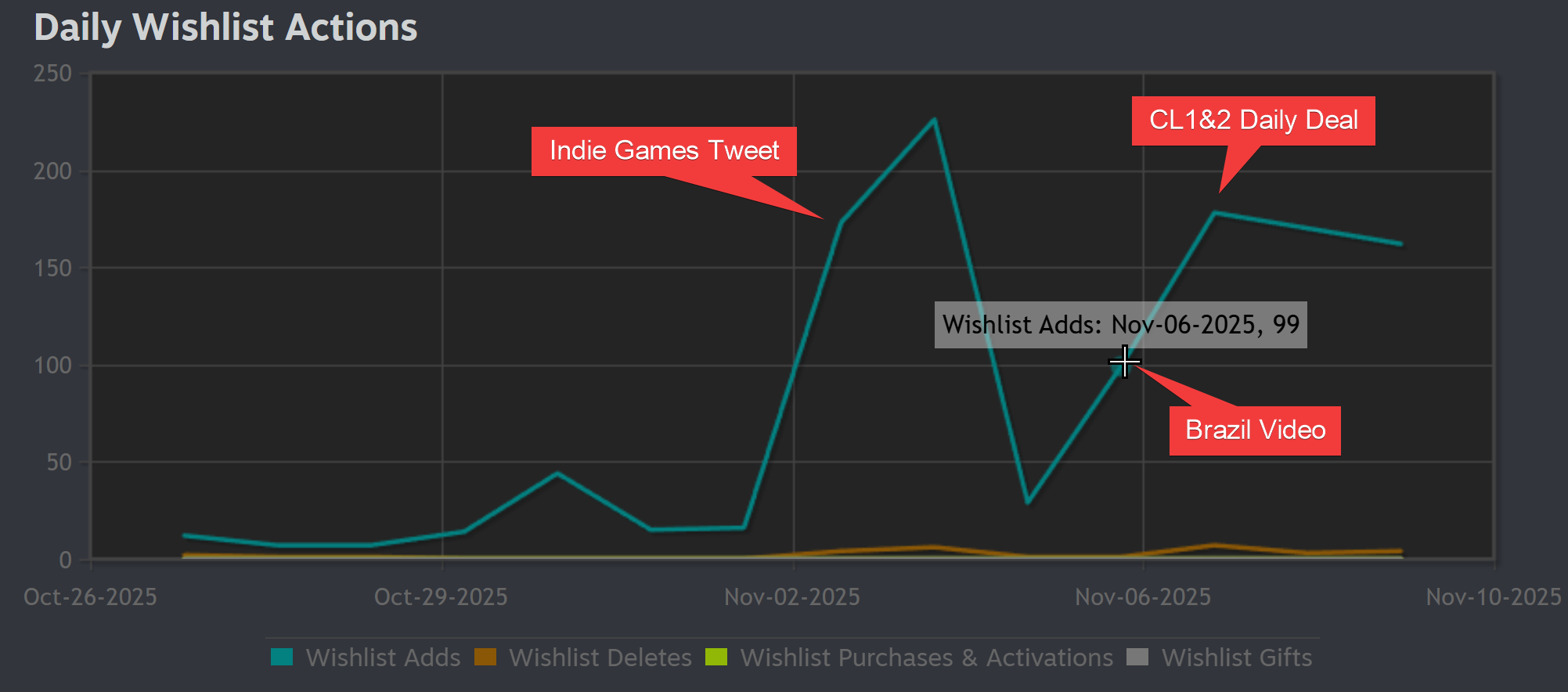
- November 3, 2025: We got a tweet from Next Indie, which drove over 400 wishlists on its own. We had never seen a tweet about one of our games measurably convert into wishlists, so we started to get super hyped and doubled down on trying to make the game as good as it could be (and fast). The tweet itself also had higher views than most other games posted from that account around the same time - a signal we’d come to rely on for other sources later, too.
- November 6, 2025: A Brazilian Youtuber “Wallacetaa” made a video about the jam version of the game. It quickly became the most-viewed video on his channel and brought in a surge of at least 300 wishlists, despite the game not having Portuguese listed in its languages. When we saw that the game actually boosted traffic on his channel (by getting way more views than his normal amount), we became ecstatic, because that meant something very important. If a Youtuber gains a surge of viewers by making videos about your game, they are likely to make more videos about your game, and other Youtubers may also.
- November 8, 2025: We managed to land a Daily Deal on Steam for both Crashlands 1 and Crashlands 2. Before the Daily Deal went out, we updated both of those games to include links on their main menus to How Many Dudes, which drove a modest number of wishlists. (We didn't expect the cross-promo to be very effective since these games are so different, but we also figured that something is better than nothing!)
By mid-November, we had a bunch more content in the game, so it was time to try our hand at making some more Youtube Shorts.
Viral Shorts
This time, we focused on a bug that had us cracking up during development where Vampire Dudes could become immortal by farting. We released this new Short on November 14, and it absolutely delivered, reaching 941,000 views in its first week and generating over 2,000 wishlists - doubling our total wishlists.
On top of that, the surge in traffic on this new Short ended up causing the Youtube algorithm to push all the other Shorts we had made, causing them all to double or even triple their previous view counts.
We then debuted a few more Shorts over the next week, including one about exploding Zombies and another one about Horse-Sized Ducks, generating another 400k views between the two of them and a whole bunch of wishlists.
After seeing the response from our own Shorts and the response when Youtubers played the Jam version, we decided to try sending out some keys for the up-to-date version of the game to about 30 streamers and Youtubers to see if we could start generating more interest that way. We sent out the keys on November 21, and then...
Nobody responded. Other than Wallacetaa, making a followup video to the first one he had made.
We'd continued to see that Steam wasn't going to help (Steam had driven for 3% of our traffic, at best), and now we weren't seeing any streamers coming to the rescue, either.
Pivoting Away from Shorts
At this point, we decided that our current approach wasn’t going to cut it, as we weren’t on pace to hit 20,000 wishlists by year end. Although we'd found that we were able to drive traffic by making Youtube Shorts, we had a real bottleneck problem. Sam was the one making the Shorts, but he was also the co-designer of the game and the primary artist for the game. Every day he spent making a Short was another day he couldn’t work on the game itself.
Zooming out, we realized we’d completed our initial goal of market testing with the shorts: videos generated a wishlist response, and (though rare at this time) videos on other creators’ channels had a higher response than usual. We’d kinda lost the plot about what these were for - they were never meant to be ALL the wishlist generation for the game, just a way to make sure we were making the right game.
But we still needed to generate wishlists, somehow, and the end of the year was fast approaching. So we decided to bust a demo out ASAP.
Our theory was that if the game is fun to watch, fun to play, and fun to make videos about, then releasing a demo would allow other people to make videos (without us needing to send them Steam keys). That would let word about the game spread organically, and our time would be freed up to focus on developing the game.
We needed a demo so the game could finally, truly market itself. There was just one problem…
The game didn’t yet have any Metaprogression.
Metaprogression has a humongous impact on the enjoyment of a roguelike. When we hunkered down for a design session about how to make this work, Seth realized that we could start just by giving players visibility into their relationship with the various Dudes and Relics already in the game.
This “Collection-Driven Metaprogression” became the bedrock for the game’s loop. Even with just a handful of dudes, once we made visible a player’s experience with each Dude and Relic by marking them as Undiscovered (never used in a Run), Silver Starred (meaning reaching level 80 in a run), and Gold Starred (meaning reaching level 100), the game suddenly became far more interesting. We then added in various benchmarks in each of these Collection buckets, at which point players would gain bonus starting items in the form of additional consumables or cash.
No content was locked behind this system, since choosing one dude naturally meant you wouldn’t be able to play with another one until another Run.
End of November wishlists: 6,378 (Gained 4,745)
December 2025: Demo Blast-Off
December arrived with a different vibe than the previous months. The shorts continued pushing Wishlists into the game passively and, more importantly, the metaprogression choices we’d made had a startling consequence:
Everyone on the team had been playing HMD for fun in their spare time.
We just couldn’t stop playing it. Seth himself had accidentally put in 20 hours over a single weekend, burning through his phone battery so many times he caved and bought a tablet just for playing HMD.
So rather than wait yet another month, we decided… screw it. If the game in its current state isn’t enough to drive the interest it needs to succeed, it likely never will be. It was time to make a final push for the demo and see what would happen before we bothered wasting any more time.
But what should we cut from the game to turn it into a demo? After a lot of research and internal debate, we eventually concluded that we’d give everything we currently had - all 17 Dudes, dozens of relics, and basically enough game to support more than a dozen hours of playtime. This may sound extreme, but our theory was simple: the demo needed enough content to allow youtubers or streamers to make 3-5 videos of it without running out of new stuff. And, if players didn’t really care about the demo when there was this much stuff in it, that’d be a strong signal that we should scope the remaining content down and not overinvest in the full launch.
Further, we reasoned that:
- Demo players are a small fraction of the overall Steam population - most people who wishlist or buy a game do not play the demo first. If we messed up by providing “too much”, it was unlikely that it would impact the majority of people who could eventually be interested in the game, since they would never play the demo anyway.
- The most successful demos are benchmarked at 1 hour of median playtime - often times even when they offer far more playtime. This means some subset of Demo players who are convinced they want a game simply stop playing the demo in order to preserve their “first time experience” at launch, so providing more than an hour or two of content won’t necessarily “burnout” all the people who are really excited by the game.
- To allow word of mouth to better spread there should be no playtime limitations at all. Plus, this let us avoid taking dev and design time to solve the notoriously impossible problem of how to mechanically impose such a limitation.
We decided to launch the Demo on December 17th instead of waiting until mid January, as we’d originally planned. Kotaku also reached out about the game around this time from a response Seth had to one of their writers on Bluesky, and they kindly agreed to hold the interview they’d conducted for the demo’s launch.
Launching into the Winter Sale was a risky strategy, but one we’d seen work well in a case study of Cairn. The strategy was anchored in the idea that very few things release during the major seasonal sales, but the “Trending Free” charts remain, with “Top Demos” charts themselves sometimes even getting featuring on the Home Page in some capacity. We reasoned that there’d be less competition in the influencer space during this time, coupled with a LOT of people spending time on Steam and looking for new games.
Plus, though there was a risk of it spectacularly backfiring, we’d only spent 2 full months on the game by this point. And, honestly, it was fun to be able to just do experimental things after coming from such a stressful and controlled experience with Crashlands 2.
Shortly before the demo launch, and unexpectedly, SIFD released a video about HMD, which rapidly became his best performing recent vid on the channel and generated 415 wishlists over its first two days. He was the only new streamer from the cohort we’d contacted 3 weeks prior who ended up making something.
December 16-18 - Demo Launch - Peak Concurrent Users (CCU): 253
We launched the demo a day earlier than we’d planned, because it was done and we didn’t feel like waiting around. Up until that day we’d generated 7,624 wishlists for HMD.
We published two youtube shorts to get the ball rolling. Both performed well, collecting 110k+400k views in their first week, and boosting all the old shorts. In the 7 days after launching these shorts, the rest of our shorts gained an additional 650k views, likely generating around 1 wishlist per 1000 views, or around 1,000 total new wishlists.
We also reached out to a much broader group of content creators, around 2,000 in total, via email, pitching the game and linking them to the demo. A handful of promising things happened:
- GX.Games featured the updated demo
- SIFD and Hii published additional videos
- The Kotaku interview article went live
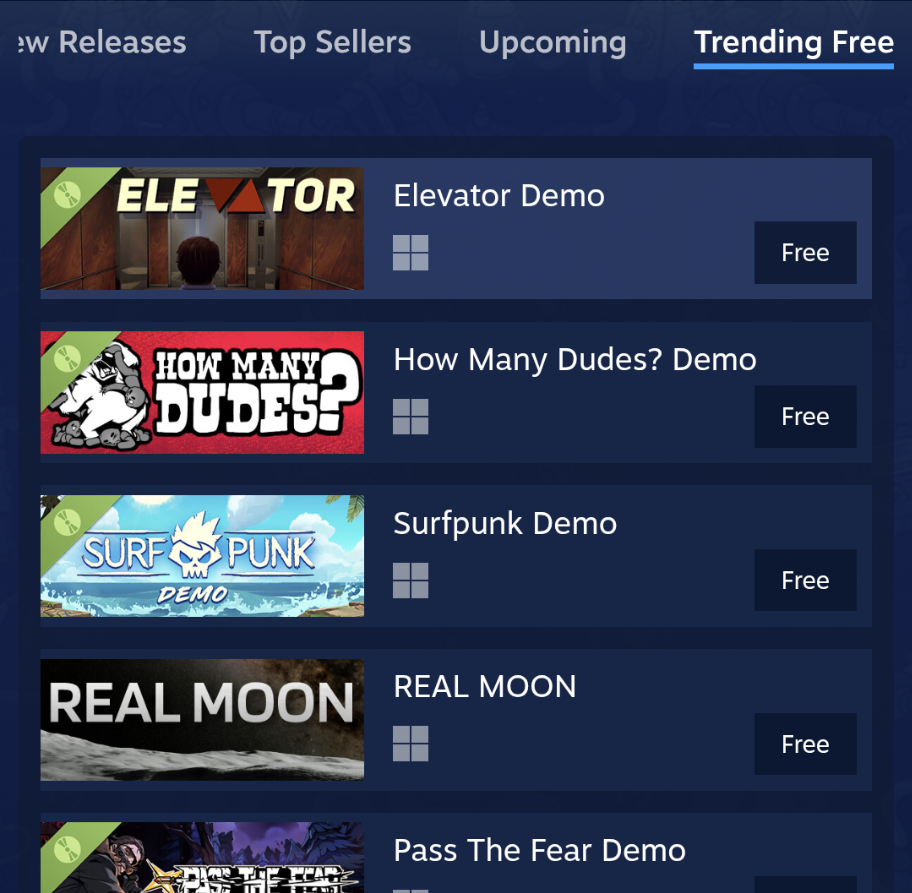
And then we popped into the ‘Trending Free’ chart section on the Steam front page, right as the Steam Winter Sale began.
December 19-25th - Peak CCU: 446
Over the course of the next week the shorts started doing their thing, more creators picked up the game, and HMD reached the top of the Trending Free section and became the #8 Most Played Demo on Steam.
And we’d already gained 10,877 Wishlists since launching the demo.
It seemed like the game had hit a plateau around 450 CCU, but we were now approaching our 20k End-of-Year Wishlists goal. We figured it’d slope down and we’d carry on working on the game, trying to finish it off within a few months as originally planned.
Then we hit an inflection point.
December 26th-31st - Peak CCU: 1914
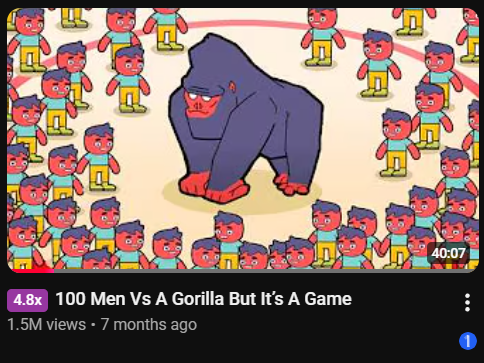
DangerouslyFunny posted a video that massively overperformed compared to the channel’s averages with more than 600k views over its first 2 days. Kyrsp33dy live streamed to 1.3k concurrent viewers, the demo cracked into the #5 Demo spot on all of Steam, and we use all that to send out a second wave of “social proof” emails to 1500 influencers, trying to show them that bothering to cover HMD might just reward them, too.
Over the next few days things just get crazier. Lirik played it on Stream to 14k concurrent viewers, HMD cracked into the Top Trending games on ALL of Steam, a big Chinese influencer picked up the game (despite no localization!), and Imcade, CTOP, MoistCr1TiKal, and PobbRose piled on.
Despite all this insane traction external to Steam, we still hadn’t triggered the discovery queue. Sitting in the Top Trending category netted us a good amount of attention, but during this time Steam was still never a driver of the majority of our traffic and wishlists.
We ended the year blowing past our 20k Wishlist goal by more than double, nearly reaching the goal we had set for launch, which was still many months away.
End of December wishlists: 43,324 (Gained 36,946)
January 2026: Big Demo Update & Localization
January 1st-22nd - Peak CCU: 3306
Every day that the attention poured in on HMD, we assumed it was the end of this insane run. But it just kept going, with many new content creators joining the pile and those who’d already made videos returning for a double, triple, or quintuple dip into the Dudiverse, culminating in MoistCr1TiKal posting to his main youtube channel and blowing up the demo even further.
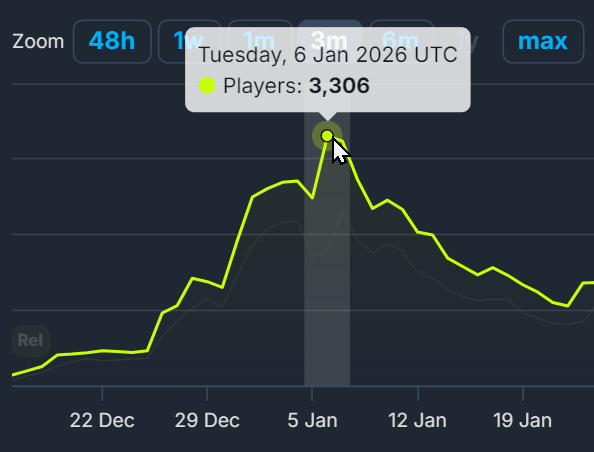
The Steam Discovery Queue finally joined the party, too, lasting for about 2 weeks and driving around 10-12k visits to the HMD store page during this time.
January 23rd - Demo Localization Update
We got our localization back and pushed out a demo build with many new languages, including Portuguese and Simplified Chinese. This was accompanied by Chinese influencer outreach, which gave the demo a second wind through the end of the month, culminating in a Douyin streamer with 700k views and many other smaller creators over this time.
End of January wishlists: 150,292 (Gained 106,968)
February 2026: Steam Next Fest Prep & Convergence Showcase
We decided to participate in the February 2026 Next Fest, as we had yet to settle on a launch date but felt that there was a 50/50 chance we’d be launching before the Summer Next Fest. From our own analyses, we found that Wishlist Age doesn’t matter in the slightest, meaning it’s just important to get wishlists and not to be too precious about trying to get them at certain points along the path to launch. Since we had plenty of momentum still even in the doldrums of February (+600-1000 WL per day), it seemed a reasonable approach.
We’d also managed a spot in the Convergence Showcase, an event we paid thousands of dollars for to secure some streamer coverage. Notably, we’d signed the deal for this the week before the demo launched, thinking that if the demo didn’t do much on its own then at least the showcase would get it into the hands of a few streamers and maybe start some kind of run. It turns out we didn’t need it, but it still managed to bring in an extra 1000 or so Wishlists.
From a cost-per-wishlist standpoint, it was not worth it, given that one or two of Sam’s shorts could easily generate 1000 WL at this point. However, it did give us an easy contact point for a whole group of creators we hadn’t managed to crack with the Demo launch, and got us some familiarity with Jesse Cox from Yogscast, one of the hosts. Some of these creators would go on to stream HMD during the launch itself, so it’s hard to fully declare the value of participation. It did spike our wishlists and demo players a bit right before Next Fest, which was mostly what we were aiming for. And, had we not had this insane run in the lead-up to it, it may well have been a driver of initial streamer interest.
February 23rd - March 1: Steam Next Fest
We came into Next Fest with around 175k wishlists and a velocity of around 1,000-1,200 wishlists per day for the preceding 5 days. We didn’t plan a demo update or creator push, instead just relying on the existing power of the demo and the sheer volume of players we had to earn us a good spot in the fest.
Comparing Next Fest’s performance to our baseline weekly performance, HMD saw a 90% increase in wishlists, 77% increase in demo downloads, and a 222% increase in Impressions. This amounted to about 6,000 additional WL from Next Fest. Using the Next Fest comparison tool provided by Chris Zukowski, we were now in the Diamond Tier of games.
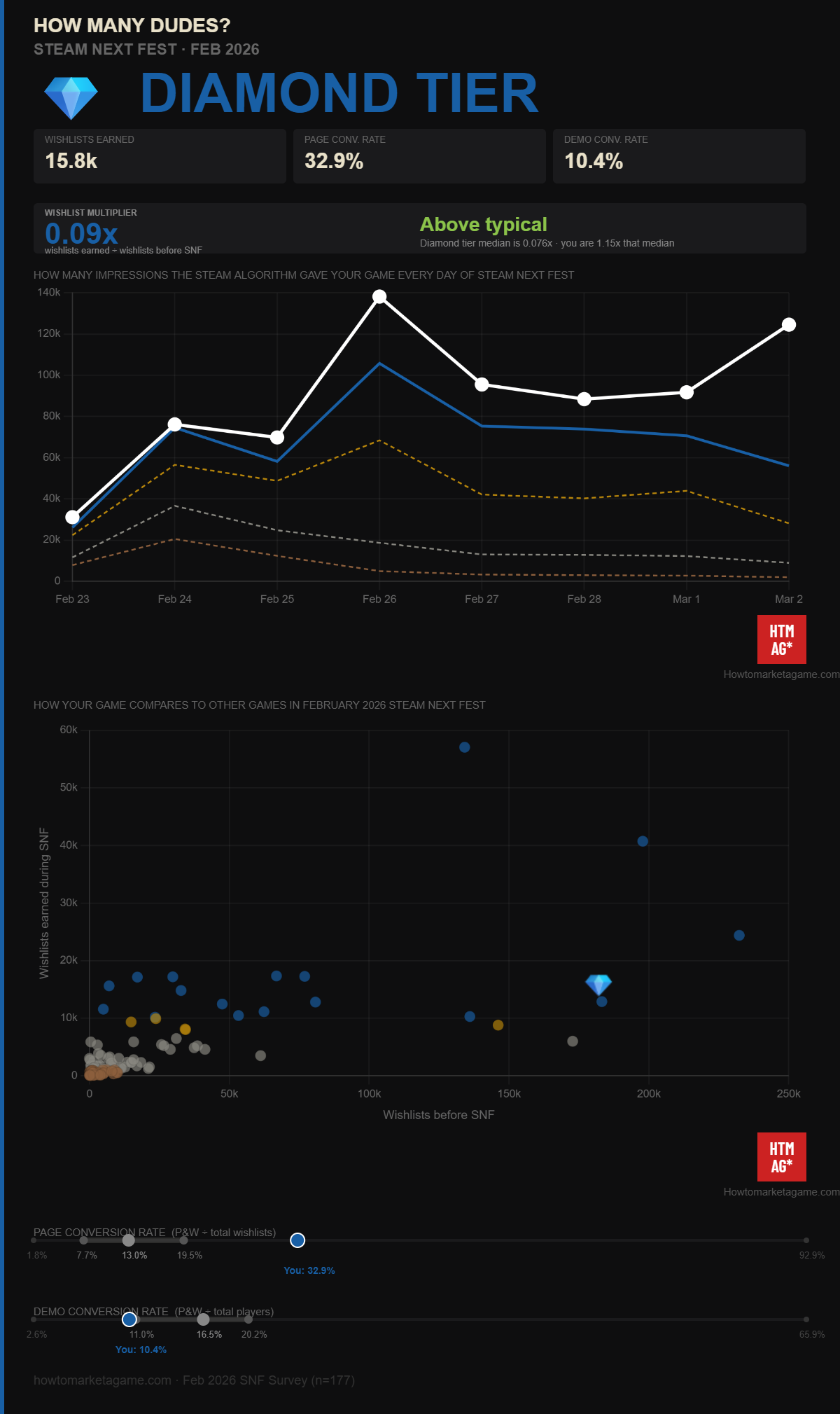
It’s possible we could’ve done better in Next Fest by planning a demo update and content creator push the week before, as most of the games that ended up outperforming us in terms of “Wishlists Gained from Next Fest” did something the week before: turning on the demo after having it off for awhile, launching their demo, or providing a large demo update and creator push. It’s also possible that we were already at a kind of saturation point pre-Next Fest, given the volume of creator coverage we’d already received.
Even so, we managed to secure a Top 25 Demos of Next Fest ranking.
End of February wishlists: 182,199 (Gained 31,907)
March 2026: Entering The Dev Cave
The Top Demos of Next Fest feature went live shortly after the fest concluded, and our inclusion ended up giving us more daily wishlists than Next Fest itself.
We also were in the BIG Spring Showcase (cost a few hundred dollars), which seemed to have a modest effect of just a few hundred extra visits to our store page.
During this time we were trying to understand how HMD’s success fit into our previous experience with Crashlands 2, the game we took 5 years to make and launched just a year prior. Some interesting comparative notes:
- CL2 participated in the June 2024 Next Fest and earned more ‘bonus’ wishlists attributable to the fest than HMD did. However, this may have also been due to us launching CL2’s demo shortly before the fest, and also CL2 just performing worse in day-to-day wishlists than HMD.
- HMD crossed 170k wishlists in just 196 days from having its store page up. CL2 took 546 days to reach the same point.
With Next Fest out of the way and everything now just cruising, we entered our dev cave to get the game finished. This included finishing our designs for the game’s final metaprogression, which turned out to be harder to do than we anticipated.
We wanted to provide more rewards for players, and we figured that the natural way to do so would be to unlock more Dudes as players played, similar to unlocking new Cards in Slay the Spire or Monster Train. It turns out that Dudes are not cards, and our attempts at wrangling a progression system with content-based rewards ended up with us circling back to what we’d already done in the demo.
We first first tried an XP system that unlocked random dudes, trinkets, AND systems like the Food Dude, Promoter Dude, and Smuggler Dude as the player successfully beat bosses and completed rounds. This felt bad because the systems it required players to unlock (promoter, smuggler, food dudes) all had such an awesome impact on run variety and texture that not having access to them just made the game not as fun.
So we ripped those out of the XP unlocks and just provided Dudes and Trinkets via this unlocking system. This turned out to create a bunch of weird player incentives around earning currency by grinding out XP by “replaying with the same team over and over” just to unlock stuff so you could “finally play the game.”
So we ripped the WHOLE XP unlock system out and just refined the collectible unlocks. They grew to span all three difficulty tiers, have more varied rewards (originally they just provided dice for rerolling choices), and just more rewards overall.
We also added the Custom Team mode, called “Ensemble”, which let players put any Dude they’d “discovered” into a premade team. Players could then unlock additional slots in Ensemble mode so they could eventually bring a whole custom squad.
All of this finally felt correct and helped us update our mental model for what the heck this weird game was. It’s what we now think of as a Roguelike-Toy, which means part of the fun is in being able to say “I wonder if…” and then explore the game space in that direction. Exploration of the play space is rewarded by the metaprogression, and players gain more and more powers to control the RNG of the game to explore aspects they’re curious about.
With all this in place we locked in to finish the game.
End of March wishlists: 201,688 (Gained 19,489)
April 2026: Launch Date Decided & All Dudes Drafted
April came and went in a hurry. We closed off a few nascent deals with platforms that weren’t progressing as fruitfully as we liked, chose a launch date for July 30th, 2026, finished the initial implementation of all 42 Dude Types, updated steam store descriptions and MP4’s now that we knew what the game was, added the launch dates without being precious about it (no big announcements outside of posting on Steam), and did some experiments with the game’s Steam Tags.
We used the tools from Gamediscoverco to explore the affinities between our demo players and wishlisters and other games, and came across a surprise - while HMD was clearly an Auto Battler, Auto Battlers weren’t well represented in our audience’s game libraries.
In fact, Auto Battlers weren’t well represented on Steam… at all. There were a handful of successful ones (Super Auto Pets), but the median and average earnings from this kind of game were actually very low.
Using this and some other insights gleaned from staring at way too much data, we maneuvered the tags away from autobattling/simulation and toward strategy/roguelike/casual, to get us closer to the games our audience was already playing (and that people tend to actually buy). This resulted in Raccoin, Balatro, Dicey Dungeons, Dungeon Clawler, and games of that ilk being the “Similarly Tagged” titles we saw on the back end.
We also decided at this point to make the game Premium on mobile. Our previous idea was to launch it as a free game with a one-time IAP unlock, such that it mirrored the availability of the demo on Steam. However, after doing some analysis on other Steam games that tried this approach, we noted what seemed like a lack of explosivity in the games’ player counts considering their free nature, and ultimately concluded that going F2P on mobile would likely just bury us against actual free to play games and cause the game to be ranked and judged poorly, thus removing many layers of organic visibility (such as those provided by the Top Paid charts).
Hot take: It appears to us that, as of 2026, Steam is actually the primary discovery mechanism for all the other gaming storefronts, driving most of a Steam->Mobile game’s success, and even many Steam->Console games’ successes. This suggests that in many cases (particularly with premium games), being a hit on Steam is a prerequisite to a game being profitable on Mobile or even on Console. In other words, if you’re making a premium game that can’t succeed on Steam, it probably can’t succeed anywhere.
End of April wishlists: 210,112 (Gained 8,424)
May 2026: Finalizing Game Systems & Content
May was also a blur as we continued grinding away on development. We also updated the game’s Capsule Art and description and got the game’s pre-registration pages live on Mobile.
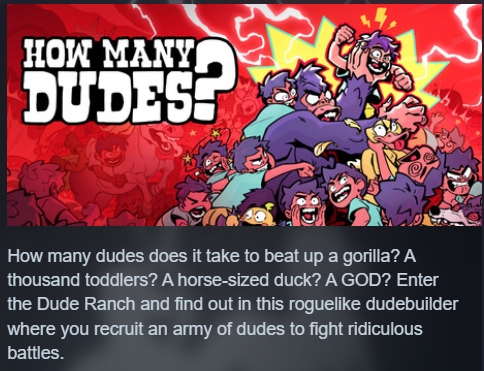
The Capsule Art definitely improved the game’s click-through rate (CTR) on Steam. By comparing specific, fixed-position traffic sources on Steam’s back-end such as “More Like This - Coming Soon List”, we saw on average a 40.4% improvement in CTR, even going as high as a 74% improvement in some categories.
We hadn’t put up store pages for Google Play or the App Store until this point because those stores simply don’t allow it until you already have a public launch date. Notably, the mobile stores are extremely ineffective at providing any sort of pre-launch "net" for premium games, even if you do put your pages up before launch, so the main benefit is really just that it saves a lot of stress to solve all of the store page problems before launch day itself.
End of May wishlists: 214,571 (Gained 4,459)
June 2026: Closed Beta & Personal Calendar Update
The Steam store released the new "Personal Calendar" feature on June 6th, resulting in an immediate boom of 3x our daily wishlist rate (from around 300->900) for about a week before falling to a steady dripfeed of additional daily wishlists (the full power of the Personal Calendar would show its strength closer to Launch).
On June 10th we began a Friends-and-Family beta for final game balancing and to iron out general build/deployment problems ahead of the launch.
Around this time we also wrapped the final launch trailer, got nominated as Best Strategy Roguelike in the Too Many Games Awards, and submitted and passed final Steam verification for our store page, making the game technically launchable on Steam.
With a month until launch, we all took a week off for our Studio’s summer break, returning to work on July 6th. (Our studio has heavily invested in rapid delivery, devOps, and testing, so this break was something we were able to comfortably do despite the impending launch.)
End of June wishlists: 223,047 (Gained 8,476)
July 2026: Pre-Launch
The game was now essentially complete, with only a variety of quality-of-life features, optimizations, localizations, and bugfixes remaining on the to-do list. We kept playing it to refine the balance, and we otherwise began turning our efforts toward marketing.
Sam created a series of Shorts each week, mostly to keep his hands busy and not go insane. Several of these (Finance Dudes, My Indie Game Blew Up Because I was Dumb) went on to get 1m+ views each, resulting in 3.8m shorts views from youtube up until July 30th. This likely amounted to around 4k-6k additional wishlists, but also served to remind people who’d seen previous shorts that the game’s launch was right around the corner.
On 7/12, How Many Dudes began appearing in the Steam Home Page via the Personal Calendar. The next day we crossed into the Top 250 Wishlisted Games while we had 234,530 outstanding wishlists. This was mind-blowing for us for two reasons. First, we had never had this many wishlists on a game with several weeks to go until launch. But second, it showed us just how much more we have to learn, since despite our current success, there were still 249 upcoming games with more wishlists.
On 7/14 we made the 1.0 build and submitted it to all stores for final review, just in case there was a problem.
On 7/15 we started seeing the Personal Calendar on the Home Page really delivering visits, suddenly to the tune of around 30k per day.
On 7/16 we sent out 2000 keys to influencers, with a gameplay embargo for 7/23, to give them plenty of time to make content and a wide window pre-launch to post it.
On 7/22, the day before the Gameplay Embargo lifted, we had 253,000 wishlists, 100,489 Google Play pre-registrations, and 492 pre-orders on the Appstore. (Google Play doesn’t actually show people that they will need to pay for the game when it launches, so we naturally expected something closer to what we’d seen from the Appstore pre-orders come launch day.)
July 23rd - Embargo Lift
The Launch Trailer went live on youtube and all storefronts, the demo got an update, and the gameplay embargo lifted.
With our previous games we typically didn’t actually have much happen the day the gameplay embargo lifted, so our expectations were low. Much to our surprise and excitement, lots of creators who played the the demo showed up!
- Imcade: https://www.youtube.com/watch?v=8Cs6Nlt2NCY
- DangerouslyFunny - https://www.youtube.com/watch?v=_KmvJVafJ7Y
- Speedy - https://www.twitch.tv/kyr_sp33dy
- Dex - https://www.youtube.com/watch?v=bOYv0H6YQjk
- KingBendrick - https://www.twitch.tv/kingbendrick - played 2 full rounds, peak 900 ish viewers
- Blitz - https://www.youtube.com/watch?v=CEbReiFo1FE&pp=ygUOaG93IG1hbnkgZHVkZXM%3D
- Garek - https://www.twitch.tv/garek
The videos kept coming over the next few days, including several from Chinese streamers who we’d reached out to.
On 7/26 the Personal Calendar Home Page widget turned over for our launch week and the How Many Dudes demo returned to the top 15 demos for both 24h peak and current.
On 7/27 we cracked into the Popular Upcoming List on the front page of Steam with 280k wishlists.
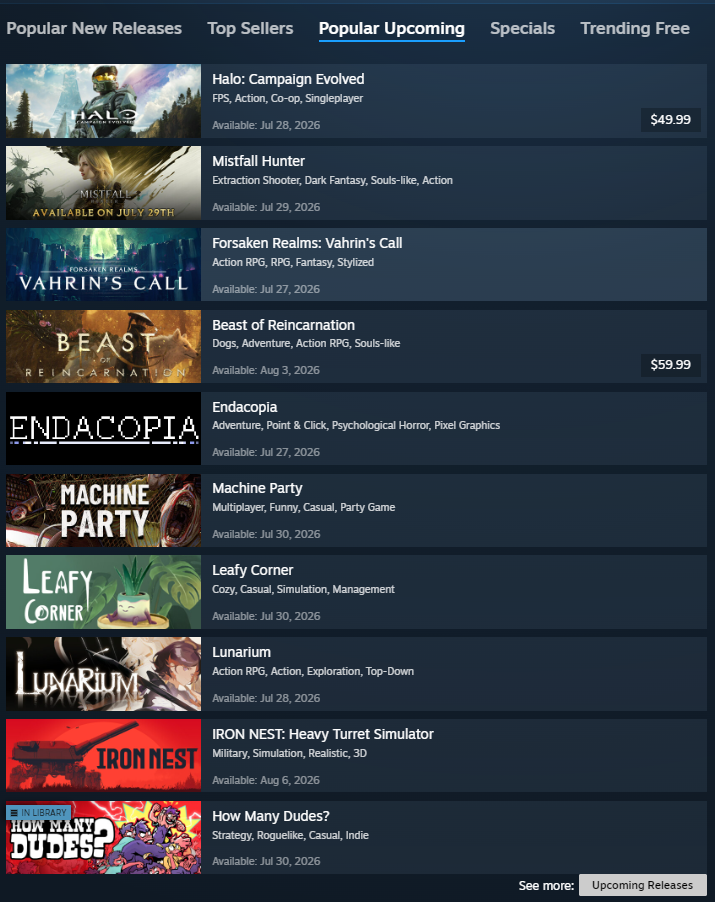
On 7/29, the day before release, we crossed 300,000 wishlists, ranked #185 in Top Wishlists on Steam, and had the #7 Most Played Demo, according to Steamdb. All the effects of the Personal Calendar, Top Upcoming Games chart, and creator outreached combined to deliver 6,000-10,000 wishlists each day from embargo day (7/23) to launch.
July 30: Launch!
Wishlists on launch day: 308,101 (Gained 76,953 since July start)
Within hours of launching we blasted up to 6k concurrent players on Steam. We’d also strategically set a 35% discount to bring the game’s price under $10, earning ourselves an additional spot on the front page of Steam, where we found ourselves showing up in three different places.
We’d also reached out to Playstack (Raccoin, Balatro) and Odd Dreams Digital / Secret Mode to set up launch bundles with Raccoin, Balatro, and Everything is Crab, which we pinned to the top of the store page. Our aim with this was just to signal to players, via association, that our game was REALLY DANG GOOD.
HMD would go on to sell 67,000 Steam units in its first 24 hours on sale and cross 100,000 units in just 50 hours, blowing our expectations to smithereens and beating out any of our previous game launches handily.
Within 5 days the game had recouped its development costs and earned us a few feathers for our caps, like shout-outs from GMTK, Gary Whitta (the BAFTA winning screenwriter for Rogue One, among many other good things), & Sarah Gailey, as well as briefly cracking the Top 10 Global Top Sellers list on Steam.
Destructoid was the only press outlet that reviewed the game during this time.
After 20 days, HMD has now sold more than 242,000 units on Steam, earning itself a Silver Spot as a Top 24 Releases for July.
To Recap
In 10 months we made the most successful game of our 14 year careers. We focused on the high-level concept for the game and early-market validation, explored and adequately developed Youtube Shorts as a skillset for our studio, and then leveraged all that into a successful demo strategy to explosive results.
Marketing HMD was like throwing gasoline on a campfire, whereas marketing all our previous games felt like blowing all the air out of our lungs to keep an ember from going out.
What comes next?
We’re still left with plenty of questions.
While this was a knockout for our studio and a definite step-up from our previous launches, it’s clear that there is room to grow. Games like Everything is Crab or Raccoin managed to vastly outsell HMD - but it’s not entirely clear why. One hypothesis is that we accidentally made How Many Dudes in a genre that actually isn’t that popular on Steam (Auto Battler… WHOOPS). Another is that the high concept is great but not quite as good as some of the others in our indie cohort. Or maybe our demo was somehow too successful and, despite our belief that demos don't cannibalize sales too many people got their fill of the game before it even came out (we had over 600,000 demo players before launch, though 80,000 of those did go on to buy the game).
To be clear - this is not a “comparison is the thief of joy” type of situation. We are beyond belief at how well HMD has performed, and always happy to see our fellow indies have successful launches. Games doing way better than ours shows us just how far our next game could go, but only if we can identify the things that can either suppress or enhance a game's success.
We also launched simultaneously on mobile (and into Google Play Pass), but due to l there we aren’t yet able to understand the impact of that, beyond the fact that the mobile storefronts remain woefully underpowered for selling premium games directly. Our best guess right now is that this will have been worth it given the scale of HMD's success, but that mobile will make up a relatively small fraction of overall revenue.
Which means we don’t yet know what the tail looks like for How Many Dudes. Will the daily revenue still pay for the studio’s operation in 2-3 months time? Or, like our previous games, did we make most of the money in these last few weeks and need to cautiously bank all of it to survive whatever comes next?
Further, can we update HMD and actually make revenue from those efforts? We’ve done post-launch updates for all our previous games, but always at an immediate (and often sizeable) financial loss. What if an Update actually pays for itself and boosts the tail?
We’re now working on that 1.1 Update to find at least some answers to these questions. If you have any questions of your own, hop into our Discord. You can also get all the way into the weeds on any point in this timeline by checking out our weekly podcast, Coffee with Butterscotch, where we talked extensively about HMD’s development and all these milestones and strategies.
And finally, a very special thanks to all the people who helped make this possible in this last insane year of dev:
- Our publishing partners Re-koup and Huqaio, for sending a billion influencer emails and handling all the inbound requests for HMD
- Jonas Tyroller for his excellent gamedev interview series that, in many ways, caused all this to even happen
- Mark Brown for running the Game Maker's Toolkit Jam that created this monstrosity
- Chris Zukowski for the wealth of marketing data on How to Market a Game
- Tim Bender of Hooded Horse for entertaining our endless curiosity and being an all-around wonderful human
- All 600,000 players of the demo, and everyone who is now playing HMD and having a blast
- Our lovely, small team at Butterscotch Shenanigans for doing great work, and everyone else who also helped make and publish this game
- And our families who had our back, not just through HMD, but in all the years since the three of us brothers decided to do the dumbest thing ever and become indie game developers